Skip to content

Free live PRESENTATION – 30 minutes

13 Tips for a Fast, Accurate Physical Inventory Audit

Tuesday, November 17, 2026
2:00 PM Eastern  •  30 minutes
2:00 PM ET  •  1:00 PM CT  •  12:00 PM MT  •  11:00 AM PT
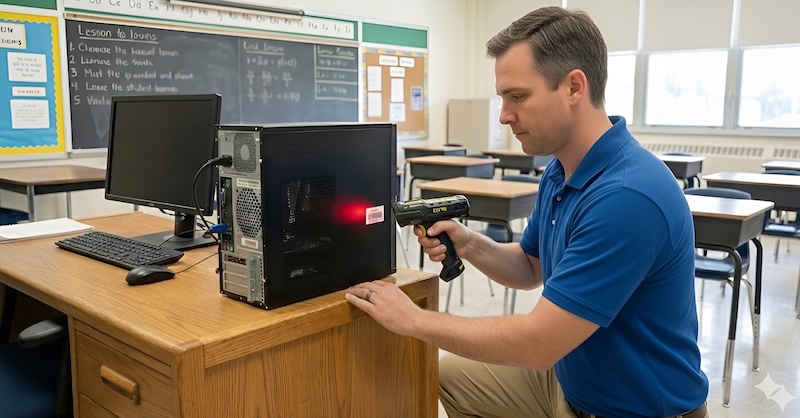
Physical inventory audits do not have to take all summer or produce a list nobody trusts. Thirty minutes of rapid-fire, field-tested tips from hundreds of K-12 audits. Five minutes of intro, then 13 tips you can use on your next audit, whether you count with a clipboard or a barcode scanner.
Cannot make it live? Register anyway and we will send you the recording.

When

Tue, Nov 17, 2026, 2:00 PM Eastern

How long

30 minutes. Five minutes of intro, then 13 tips, and we end on time.

What it costs

Free. This is a value session, not a demo.

Cannot attend live?

Register anyway and the recording comes to your inbox.

What you will learn

Six things you can put to work on your next audit

Every tip comes from audits our team has actually run or helped districts run, in buildings from 1,000 students to over 100,000.

Pick a window that works

How to choose an audit window that survives contact with a real school calendar, and which weeks to refuse outright.

Clean the list before you count

Why cleaning your asset list first saves days of reconciliation later, and what to dispose of before anybody walks a building.

Set threshold and scope

How to set the dollar threshold and scope so every auditor counts the same things the same way, backed by board policy.

Staff it right

Why a small dedicated team beats teacher self-audits every time, on accuracy and on total hours spent.

Handle exceptions in the room

What to do with untagged items, moved items, and serial mismatches while you are still standing in front of them.

Reconcile and close the loop

How to resolve missing and found fast, then report to the business office and the board without a second scramble.

The full agenda

All 13 tips, nothing held back

Here is every tip on the list. The titles are the easy part. The session will deep-dive into each one, including what goes wrong and how to recover.

Phase 1Before the audit
1

Pick the right window

Quiet buildings and open rooms. Summer, breaks, and teacher workdays, not testing week or the first two weeks of school.
2

Clean the list before you count

You are auditing against a list. If the list is garbage, every exception is noise. Stop auditing ghosts.
3

Know your threshold and follow board policy

The board fixed asset policy sets the dollar floor and the categories. Not your opinion, not the auditor’s mood that day.
4

Send auditors in equipped to tag on the spot

Audit day is the best day to scoop up what fell through the cracks. Every auditor carries blank tags, no exceptions.
5

Build a room-by-room route map

A floor plan plus an ordered room list for each auditor. No wandering, no doubling back, and closets marked, because that is where the surprises live.
6

Communicate with staff ahead of time

Half of all delays are locked doors and devices in backpacks. One email to teachers and principals fixes most of it.
Phase 2During the audit
7

Scan, do not type

A barcode scanner reads a tag in a second with no transcription errors. Typed tag numbers are slow and wrong often enough to matter.
8

One auditor per room

Two people in a room scan the same thing twice and both assume the other got the rest. Assign rooms, not pairs.
9

Use a small dedicated team, not teacher self-audits

Three or four trained, equipped, accountable people beat thirty teachers doing it badly, on both accuracy and total time.
10

Count what is there, not what the list says

Confirming from the list makes auditors see what they expect to see. Count the room blind first, then compare.
11

Handle exceptions on the spot

Untagged item, tag from another room, serial mismatch: a photo and a note now. Memory next week is worthless.
Phase 3After the audit
12

Reconcile fast, while memory is fresh

Resolve missing and found within a week. Every day after that, the story gets fuzzier and the decision gets harder to document.
13

Close the loop and schedule the next one

Update the master record, report to the business office and the board, and put next year’s audit on the calendar today.
Who should attend

Built for the people who actually get handed the audit

If your name ends up on the inventory when it comes due, this session was written for you.
Business office staffFixed asset managersTechnology directorsWarehouse and facilities leadsBusiness managers and CFOsAnyone who gets handed the audit
Your host

Scott Cole

Co-Founder, Divot Assets
Scott has spent his career on K-12 fixed assets, walking buildings with district teams and cleaning up inventories that had drifted for years. Everything in this session comes from audits our team has run or helped districts run, not from a textbook.
Who is behind this

Divot Assets does one thing

K-12 only

Fixed assets for school districts. Built for schools, not adapted from a warehouse product.

1,000 to 100,000+ students

Districts of every size, across the country, with the same core problems at different scales.

Software and boots on the ground

K12 Asset Pro for the record keeping, and on-site physical inventory teams when you want it done for you.

Seats are free, the clock is not

Save your seat for November 17

Thirty minutes, 13 tips, and a recording either way. Register now and Zoom will send you the calendar invite and a reminder before we go live.
Tuesday, November 17, 2026  •  2:00 PM Eastern